|
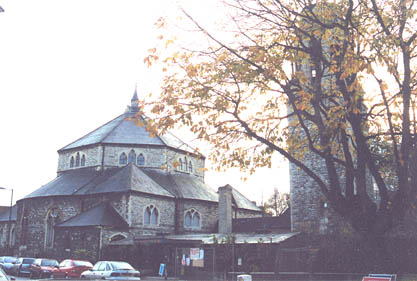
Statement from St. Georges Theatre Development
Trust
on Islington Council's agreement that the building should revert
to use as a place of worship and to House on the Rock's development
plans.
30th March 2005
Our trust was incorporated as a registered company two years
ago. Our aims include the development of arts activities and
we are a buildings preservation trust dedicated to the creative
development of St Georges Theatre. We have applied for
charitable status and are open to public account and community
participation. Our vision is to create an international arts
centre serving and involving the culturally diverse community
which lives in our neighbourhood. Our core members and our associates
cover a very wide range of skills and capabilities. We
are prepared to hold on to our vision in the long term and will
persist in our efforts to achieve our aim.
The St. Georges Theatre Development Trust condemns Islington
Council's failure to undertake a sufficiently thorough and widespread
consultation with the communities affected by their decision.
There has been no assurance that the arts facilities lost to
the community through their action are to be replaced. This
failure contravenes Islington's stated policy.
The recent occupation of the building by the Circle Community
Centre has brought the plight of the building to wider sections
of the community and there are now moves by local people to
try to prevent the House on the Rock, a Nigerian based pentecostal
protestant church, from developing the building.
The Council's agreement to the plans includes a section s106
which would tie into the planning consent a code of management
which would guarantee arts and community use of the building
has excited the interest of some local residents and others
in the campaign to keep St Georges as a theatre. Other
people have suggested other forms of co-ownership with House
in the Rock.
The Trust has tried to ensure through discussion with HOUSE
ON THE ROCK and their architects that the plans for the internal
space can accommodate a number of performance configurations.
Nevertheless, the St Georges Theatre Development Trust does
not believe in the possibility of sharing control or ownership
of the building with House on the Rock.
We believe an integrated and open arts practice in the building
would be impossible given the restrictions which House on the
Rock have already stated must apply in the building. An
arts practice must be based on free expression and must be challenging
and diverse. We do not doubt that occasional use can be
made of the building for performances and community meetings.
We would point out, however, that there is already a considerable
supply of community meeting rooms in the area.
We will not co-operate with any scheme which makes it appear
credible that an arts practice can take place in the building
given the current ownership. We believe that our participation
in any such scheme will allow Islington Council to make an argument
that it has not contravened its own stated policy in making
a planning decision which surrenders an arts, entertainment
or cultural facility. The Council has been complicit in a major
loss of an arts facility to the community.
We also wish to make a moral argument. This building was built
for the people of the area by the extraordinarily internationally
oriented architect who was the surveyor of the Tufnell Park
Estate at the time. The Church of England congregation
moved out of the building in the late 60s because the space
was unsuitable for their requirements. The church building
was then bought by a charitable company whose aim was to produce
Shakespearean theatre there. The controllers of this charity
then managed to transfer the property to a privately owned company
in the early 90s. This transfer, for which the building was
valued at £100,000, was made offshore beyond the reach
of regulatory authorities.
The man who inherited and sold the property just over ten years
later to House on the Rock did so for a sum of £1.2 million.
We have made appeals to the Charity Commission and will
continue to do so. This story represents outrageous and illegal
profiteering at the expense of the community and the Church
of England. The House on the Rock is now complicit in
this. They have bought the building for well over the market
price. This is in contravention to the law governing charities
and we are making another appeal to the Charity Commission.
Furthermore we want the Council Planning Department to enforce
the repair orders which they have issued as the guardians of
the building's listed status. We support Save London Theatres
Campaign and the Theatres Trust in their efforts to conserve
the building as a theatre space. We are open to discussion and
mutually agreed activities with all who have a genuine interest
in the building as a creative asset in the community.
We support House on the Rock's efforts to restore and safeguard
the fabric of the building. We hope this will lead to
increased community access to this remarkable creative asset.
Their project though well supported and apparently well resourced
in its initial stages appears fragile to us given that their
congregation of 700 is based in North West London and that there
are a considerable number of evangelical churches already active
in our area.
Our vision remains and we will be working to sustain that vision.
We will be watching out for the long term interests of the building
and continuing to act as a focus for the development of an international
arts and performance centre at St Georges Theatre.
30th March 2005
Jonathan Chadwick
|